How Gamification Is Influencing Digital Entertainment
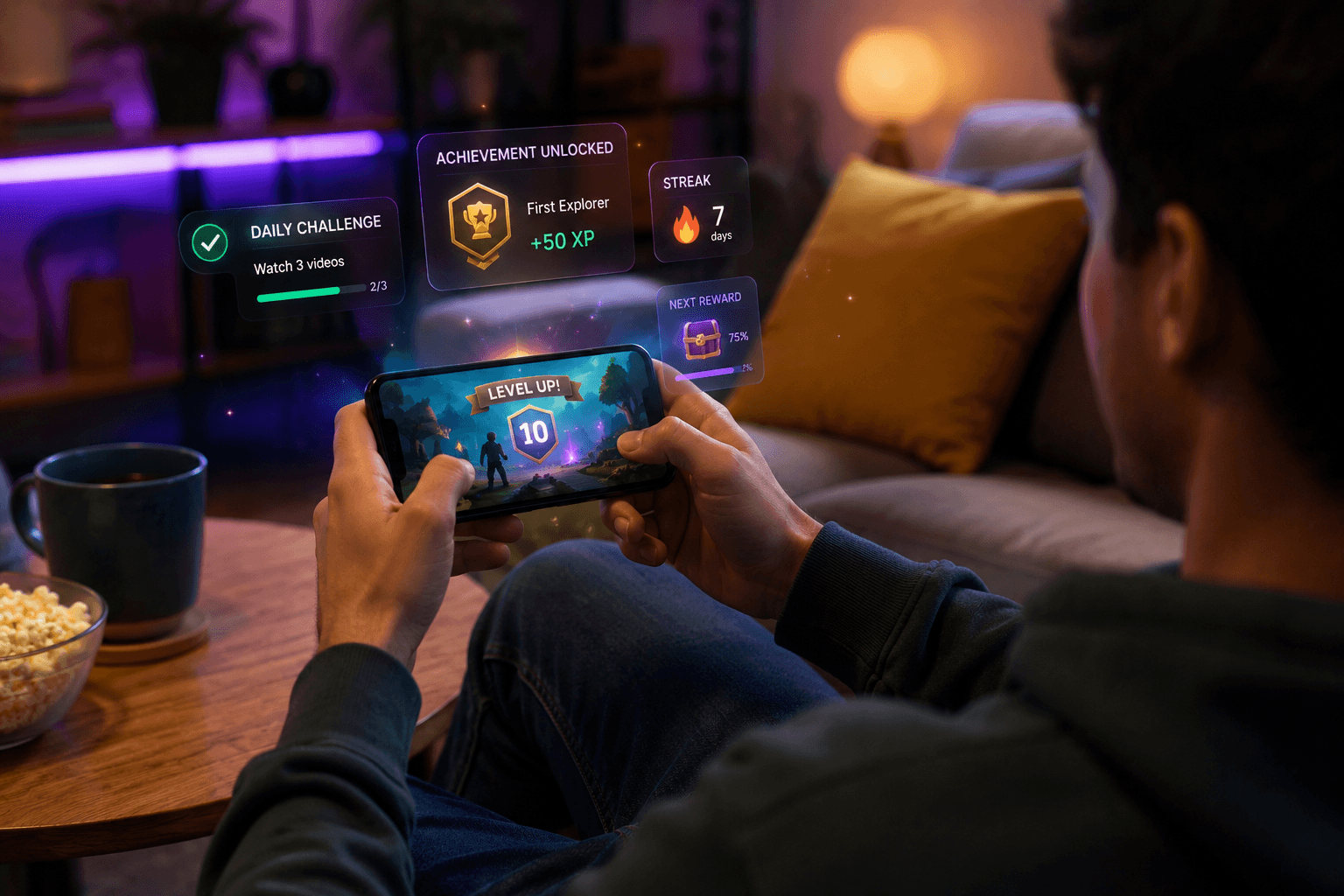
Nobody just watches anymore — not really. Open a streaming app, a mobile game, or even a group chat with friends, and there's usually something waiting: a task to finish, a streak to keep alive, a reward that expires if you don't show up tomorrow.
This shift is described through gamification. It does not mean turning every service into a full game. Instead, it means borrowing selected game techniques and applying them to non-game activities. Used well, these techniques make an experience clearer and more motivating. Used poorly, they can feel repetitive or manipulative.
Gamification Definition
A simple gamification definition is the use of familiar game features—such as points, badges, levels, streaks and challenges—to make non-game activities more engaging.
These features give users visible feedback. Users can quickly see what they have finished, what comes next and how close they are to a goal. That visible progress helps explain why gamification works so well across digital entertainment.
It is not limited to video games. Music apps reward listening streaks, fitness platforms give badges, learning services track levels, and streaming communities rank active members.
What Is Gamification in Practice?
To understand what gamification is, think about how platforms turn everyday actions into small goals. Watching a video, completing a profile, returning each day or joining a live event can earn progress, points or rewards. This gives users a clear reason to keep exploring the platform.
A typical system may combine:
- daily or weekly missions;
- progress bars and experience levels;
- personalised achievements;
- social rankings;
- unlockable content;
- rewards for repeated use.
The goal is to create a reason to return. Instead of treating each session as separate, the user sees it as part of a longer journey.
The Main Elements of Gamification
The most effective elements of gamification are not always the most visible. A badge may attract attention, but the underlying structure matters more.
| Element | Purpose |
| Progress tracking | Shows how close the user is to a goal |
| Challenges | Gives the user a clear task |
| Rewards | Recognises effort or participation |
| Levels | Creates a sense of development |
| Social comparison | Adds competition or recognition |
| Feedback | Confirms that an action produced a result |
These elements work best when they support the main activity. A music app should still make listening easy, and a streaming service should not force users through unnecessary tasks before they can access content.
How Gamification Changes Online Gaming?
Online gaming has always included progress systems, but modern platforms are extending them beyond the game itself. Loyalty programmes, missions, seasonal events and account-level rewards now connect separate sessions into one continuous experience.
On a platform such as JB Casino, gamified features may appear through reward levels, task systems, or progress-based promotions.
The mechanics should remain transparent: users need to understand what is required, how rewards are calculated and whether conditions apply.
Gamification can also improve discovery. A challenge may encourage a user to try a new category, while a progress tracker can make a large platform easier to navigate.
Gamification Software and Platform Design
Modern gamification software lets companies add reward systems without building every feature from scratch. These platforms may manage points, badges, user levels, missions, notifications, and analytics.
The software also helps teams compare whether users respond better to weekly goals, short challenges, or long-term progress systems.
Technology does not solve the design problem by itself. A poorly planned reward structure can create confusion or encourage users to chase meaningless points. The software provides the tools, but the experience still depends on clear rules and useful incentives.
Personalization Makes Rewards More Relevant
Gamification is moving from fixed rewards toward personalized systems. Two users may receive different challenges based on their activity, interests, or experience level.
A new user may receive simple introductory tasks, while an experienced user may see advanced goals. This can make rewards more relevant and reduce the chance of showing incentives that do not match user behaviour.
However, personalization should not feel intrusive. Users should understand why a challenge appears and what data influences it.
Gamification Solutions Beyond Games
Many gamification solutions now operate outside traditional gaming. Streaming services may reward attendance at live events, entertainment apps may track content discovery, and creator platforms may recognize active community members.
These systems can improve retention, support onboarding, encourage feature discovery, and strengthen community activity.
The strongest solutions connect rewards to actions that already have value. A platform should not create tasks simply to inflate activity numbers.
Gamification Tools for Engagement
Different gamification tools serve different purposes. Some focus on visual rewards, while others analyze behavior, segment users, or automate messages.
The data can reveal whether a task is too difficult, whether rewards are unclear, or whether notifications arrive at the wrong time.
Yet high participation alone does not prove success. A better measure is whether users find relevant content, return voluntarily, and continue using the platform after a campaign ends.
Risks of Over-Gamification
Gamification loses value when every action becomes a task. Constant badges, alerts and countdowns can create pressure rather than enjoyment.
There are also ethical concerns. Limited-time rewards and streak systems may encourage users to stay longer than intended. In entertainment environments involving money, these mechanics require particular care.
Responsible design should include clear conditions, realistic goals and easy access to account controls. Gamification should support user choice rather than make stopping feel like failure.
Conclusion
Gamification is influencing digital entertainment by turning isolated actions into visible progress. Points, levels, missions and rewards can help users understand a platform, discover features and stay engaged.
What matters most is whether the feature genuinely improves the experience. Good gamification supports the main product instead of competing with it, giving users clear feedback without adding unnecessary pressure.
As platforms become more personalized, simple badges will matter less than rewards and challenges that fit each user. The best systems will keep people engaged while remaining clear, easy to understand and firmly under the user’s control.

Jim's passion for Apple products ignited in 2007 when Steve Jobs introduced the first iPhone. This was a canon event in his life. Noticing a lack of iPad-focused content that is easy to understand even for “tech-noob”, he decided to create Tabletmonkeys in 2011.
Jim continues to share his expertise and passion for tablets, helping his audience as much as he can with his motto “One Swipe at a Time!”