
The Finger Revolution: How Touch Screens Fundamentally Changed Game Design Language
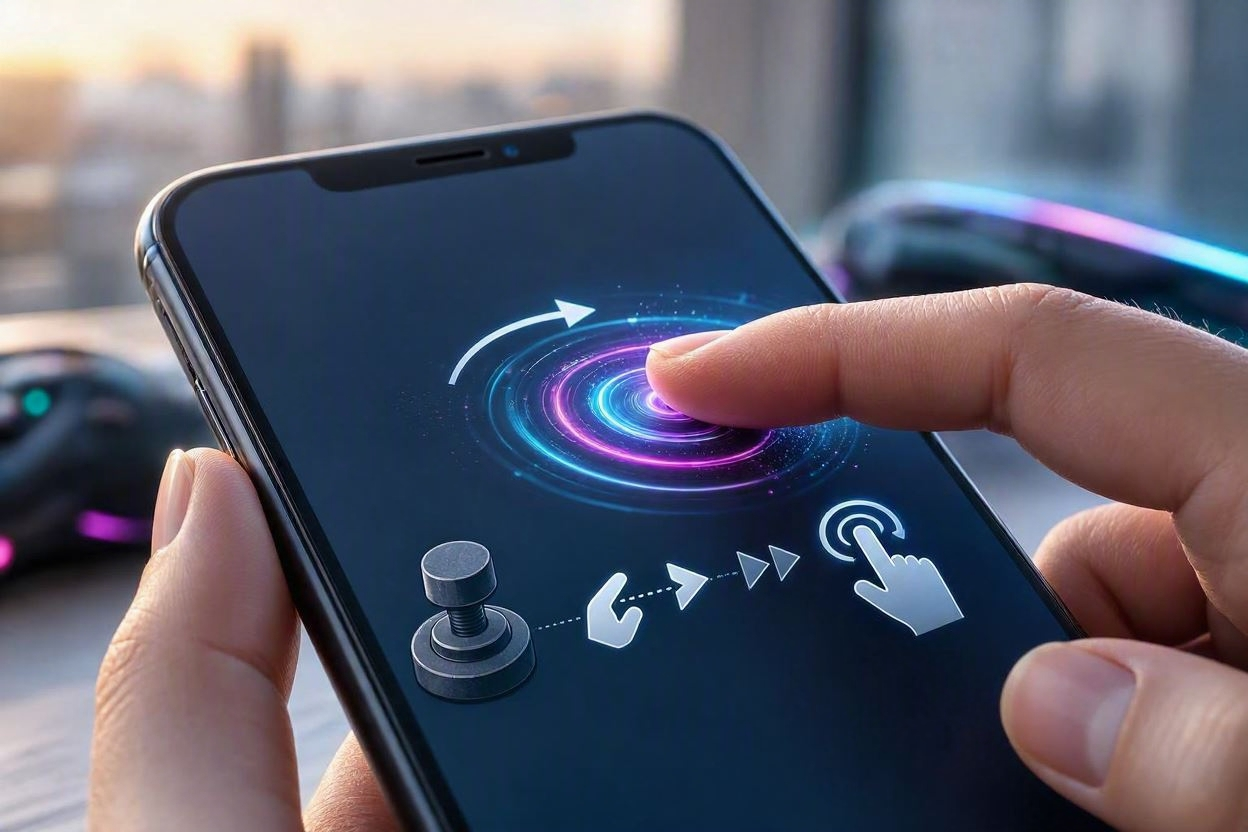
Before touch screens, game control meant physical peripherals: joysticks, buttons, controllers. Games designed around these input methods. Then smartphones arrived with touch screens, and everything changed. Developers couldn't create games using traditional controls.
Instead, they invented entirely new design language. Understanding this revolution—from buttons to fingers—reveals how technology shapes creativity. When examining innovative game design on touch platforms, including experiences offered through تسجيل دخول 1xbet, you see this finger revolution in action.
From Controllers to Fingers
Physical controllers provided precise, stable input. Joysticks moved in specific directions with clear feedback. Buttons provided binary inputs—pressed or unpressed. Game designers built complex systems around these reliable inputs. A single controller offered dozens of possible actions.
Touch screens eliminated the controller. Players interacted directly with the game through their fingers. This seems simpler but requires completely reimagining game design. A finger isn't a precise instrument like a joystick. It covers larger screen area. It lacks the tactile feedback buttons provide.
These limitations forced innovation. Developers discovered that direct manipulation—touching objects directly on screen—felt more intuitive than abstract controls. Swipe gestures became natural navigation. Pinching zoomed. Tapping selected. The finger became the interface itself.
Intuitive Action, Complex Depth
The brilliance of touch design lies in achieving intuitive action despite maintaining depth. Angry Birds appears simple—fling birds at structures.
Yet depth emerges through physics simulation and strategic positioning. The simple gestural input—pulling back to aim—conceals mechanically sophisticated systems.
Traditional games used complex button combinations for actions. Touch games achieve similar complexity through gesture layers.
Simple base gestures combine for sophisticated strategies. A single swipe might mean different actions depending on context or timing. Gestures become language through which players communicate with games.
This gestural language feels natural because it mirrors real-world actions. People understand swiping because they swipe pages.
Tapping feels like touching. Pinching resembles zooming with hands in physical space. Developers leveraged real-world metaphors for intuitive interaction.
The Challenge of Precision
Touch screens excel at broad gestures but struggle with precision. Drawing on screen with finger lacks accuracy of mouse.
Targeting small enemies requires enlarged hit zones or creative design workarounds. Games compensate through design cleverness rather than hardware precision.
Developers discovered that obstacles matter less than psychological perception. If games feel precise despite technical limitations, players are satisfied.
Visual feedback confirming actions matters enormously. Screen vibration on iOS provides haptic feedback confirming contact. These feedback mechanisms convince players their input registered precisely despite finger-screen interaction limitations.
Dimensionality Shifts
Controllers enabled 3D game control through analog sticks. Touch screens initially struggled with 3D manipulation. Early 3D mobile games felt awkward because screen-based controls didn't translate well to 3D space.
Over time, developers invented solutions. Virtual joysticks overlaid on screen. Tilting phones controlled 3D movement. Swiping rotated cameras. These innovations discovered new control paradigms. Some exceeded controller-based 3D control in intuitiveness.
The Social Revolution
Touch screens changed gaming sociologically. Physical controllers created single-player experiences or required sharing controllers.
Touch screens enabled simultaneous multi-touch, allowing multiple players interacting on same screen simultaneously. This created new social gaming possibilities.
Games designed around pass-and-play mechanics emerged. Players took turns holding the device. Games designed for simultaneous touch collaboration created genuinely novel experiences. This social dimension became central to mobile gaming's appeal.
Free-to-Play Emergence
Touch screen adoption coincided with free-to-play monetization emergence. These developments reinforced each other.
Free-to-play games required different design than premium games. Monetization through microtransactions and ads required continuous engagement design.
Touch controls enabled rapid game sessions perfect for monetization models requiring constant engagement. Five-minute play sessions between touches of various game elements created engagement loops publishers could monetize effectively.
Modern Evolution
Modern touch design has matured dramatically. Developers understand gestural design language deeply. Games achieve remarkable sophistication through touch input. Complex strategy games function perfectly on tablets. Precision action games overcome initial limitations through clever design.
New hardware innovations—pressure-sensitive screens, haptic feedback, camera-based tracking—expand touch design possibilities. Developers continuously discover new capabilities as hardware advances.
The Lasting Impact
The finger revolution proved that new input methods don't limit games—they transform them. Every interface paradigm shift throughout gaming history forced redesign. Light guns, motion controllers, voice input—each created distinctive game design language.
Touch screens demonstrated this principle powerfully. Rather than limiting creativity, direct touch manipulation enabled entirely new game design categories. Puzzle games, strategy games, and casual games flourished because touch interaction suited their mechanics perfectly.
Conclusion
The transition from controllers to fingers represents one of gaming's most profound design revolutions. Touch screens eliminated mechanical input mediating interaction, creating direct manipulation experiences. This forced designers to rethink every assumption about game control.
The result—a decade of innovation creating games that feel intuitive despite complex underlying systems. The finger revolution ultimately teaches that constraints catalyze creativity. Limitations force designers to think differently, often producing superior results to unconstrained design.
Touch screen gaming remains dynamically evolving as developers continue discovering new possibilities from this fundamental input shift.

Jim's passion for Apple products ignited in 2007 when Steve Jobs introduced the first iPhone. This was a canon event in his life. Noticing a lack of iPad-focused content that is easy to understand even for “tech-noob”, he decided to create Tabletmonkeys in 2011.
Jim continues to share his expertise and passion for tablets, helping his audience as much as he can with his motto “One Swipe at a Time!”