
eSIM Explained: Why Tablets and Mobile Devices Are Moving Away from Physical SIM Cards
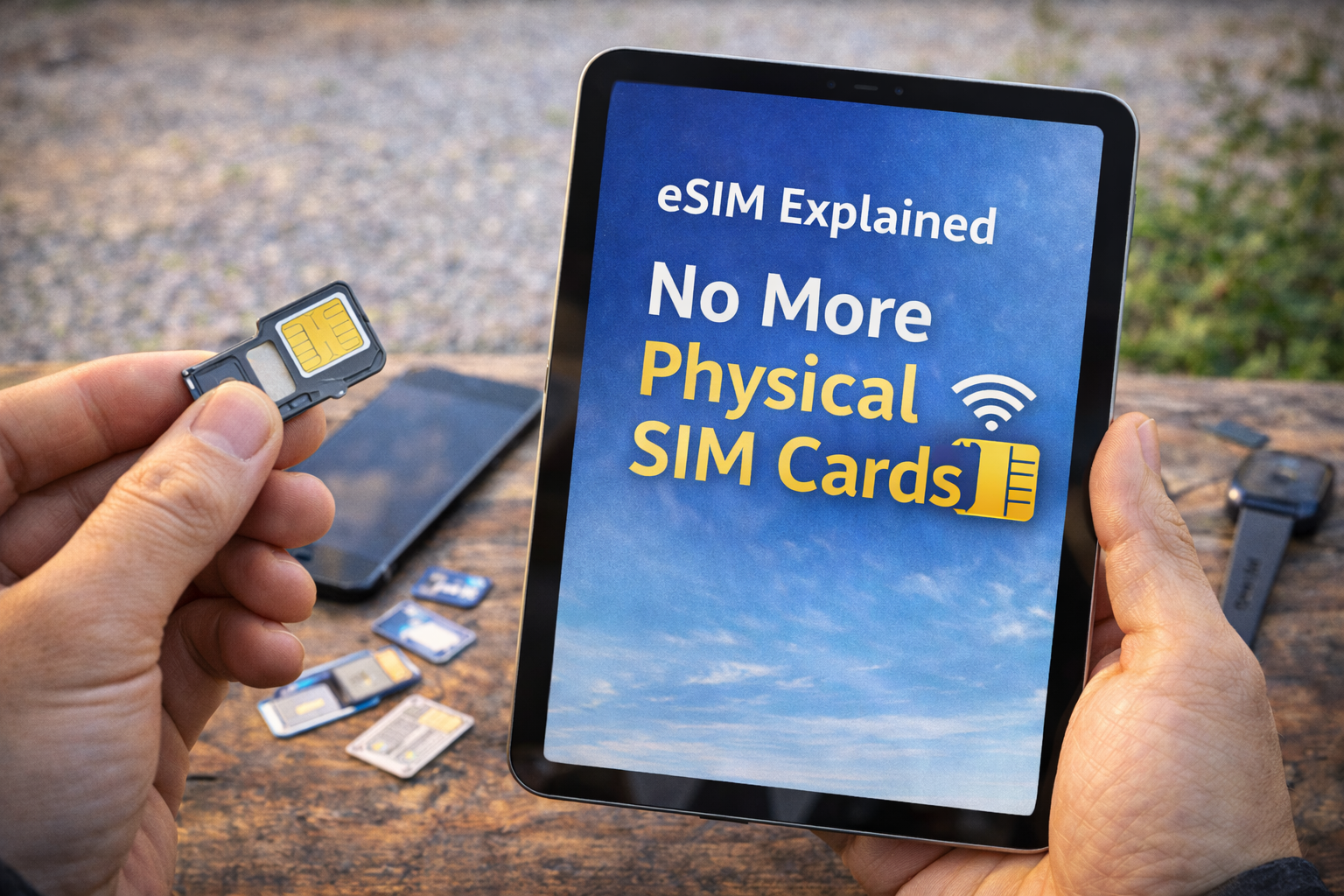
Mobile devices have been steadily shedding physical components over the past decade. Headphone jacks disappeared, removable batteries became rare, and cloud storage reduced the need for local memory expansion. One of the latest shifts follows the same logic: the move from physical SIM cards to eSIM technology.
For users of tablets, smartphones, and other connected devices, this change is more than a design choice. It reflects how mobile hardware is evolving to support flexibility, constant connectivity, and simpler user experiences—especially for people who rely on mobile data rather than Wi-Fi.
What is an eSIM, exactly?
An eSIM (embedded SIM) is a digital version of the traditional SIM card. Instead of inserting a small plastic card into a device, the SIM functionality is built directly into the hardware. Network credentials are installed digitally, usually by scanning a QR code or through an app.
From a technical perspective, the device still connects to cellular networks in the same way. The difference lies in how the network profile is managed. With an eSIM, users can add, remove, or switch data plans through software rather than physically swapping cards.
Most modern smartphones and many tablets—especially cellular-enabled models—already support eSIMs alongside or instead of physical SIM trays.
Why device manufacturers are embracing eSIMs?
Hardware design plays a major role in the adoption of eSIMs. Removing the SIM tray frees up internal space, which can be used for larger batteries, better cooling, or additional components. Fewer openings in the device also improve durability and water resistance.
Beyond design, eSIMs simplify manufacturing. A single device model can be sold globally without region-specific SIM configurations.
The same hardware can be activated on different networks through software alone, which aligns well with how devices are distributed and updated today.
Why eSIMs make particular sense for tablets?
Tablets occupy a unique position between smartphones and laptops. They’re often used on the move—for work, entertainment, navigation, or creative tasks—but many users still rely on Wi-Fi hotspots to stay connected. That approach has limitations.
With an eSIM-enabled tablet:
- there’s no need to hunt for public Wi-Fi,
- connectivity works immediately after activation,
- switching data plans doesn’t require physical access to the device’s SIM slot.
For users who treat tablets as productivity tools—editing documents, syncing files, attending video calls—having direct cellular access can significantly improve reliability and performance.
The appeal of unlimited data on mobile devices
As mobile devices become more powerful, data consumption increases. High-resolution streaming, cloud backups, collaborative tools, and real-time communication all rely on consistent data access. For tablets in particular, usage patterns can resemble those of laptops rather than phones.
This is where eSIM plans with high or unlimited data allowances become relevant. For users who depend heavily on mobile connectivity, solutions like Holafly's esim with unlimited data illustrate how eSIM-based plans can support always-connected tablets and devices without the constraints of traditional SIM cards or frequent plan changes.
Instead of managing data limits or switching networks manually, users can focus on how they use their devices.
eSIMs beyond tablets: a broader ecosystem shift
The move to eSIMs isn’t limited to phones and tablets. Laptops with cellular connectivity, smartwatches, and even some IoT devices are adopting the same approach. The goal is consistent across categories: reduce physical dependencies and make connectivity more adaptable.
As devices become more interconnected, software-controlled network access fits naturally into ecosystems built around cloud services, remote updates, and device management platforms.
What this means for everyday users?
For consumers, the transition to eSIMs is mostly subtle. Devices still connect to networks, calls still work, and data speeds remain dependent on carriers and coverage. The difference lies in convenience and flexibility.
There’s less friction when setting up a new device, changing plans, or using the same hardware in different contexts. For tablet users in particular, eSIMs make it easier to treat their device as a standalone, connected tool rather than something tethered to Wi-Fi.
Conclusion: a logical step in mobile device evolution
The shift from physical SIM cards to eSIMs follows the same pattern seen across modern technology: fewer physical parts, more software control, and greater flexibility for users. For tablets and mobile devices designed to work anywhere, eSIMs are not just a feature—they’re a logical next step.
As hardware continues to slim down and usage becomes more data-intensive, embedded connectivity aligns with how people actually use their devices today.
Whether for productivity, entertainment, or mobility, eSIM technology is quietly becoming the default foundation for connected devices.

Jim's passion for Apple products ignited in 2007 when Steve Jobs introduced the first iPhone. This was a canon event in his life. Noticing a lack of iPad-focused content that is easy to understand even for “tech-noob”, he decided to create Tabletmonkeys in 2011.
Jim continues to share his expertise and passion for tablets, helping his audience as much as he can with his motto “One Swipe at a Time!”