Best Tablet Apps That Actually Improve Your Life in 2026: Wellness, Productivity, and AI in One Screen
Tablets have become much more than devices for watching videos or browsing the web. In 2026, they occupy a unique space between smartphones and laptops, offering enough screen space for focused work while remaining portable enough for everyday use.
At the same time, software is evolving. Many of today's most useful apps combine artificial intelligence, productivity tools, and wellness features to help users manage their time, improve habits, and stay organized.
Many of these experiences are powered by cross-platform technologies that allow developers to create consistent experiences across devices.
Businesses looking to build applications for multiple platforms often partner with a flutter app development company to streamline development and maintain a unified user experience.
Rather than downloading dozens of apps, many users are focusing on a smaller set of tools that genuinely improve daily life.
The Best Tablet Apps at a Glance
The infographic below highlights several apps that stand out in 2026 and where they deliver the strongest tablet experience.
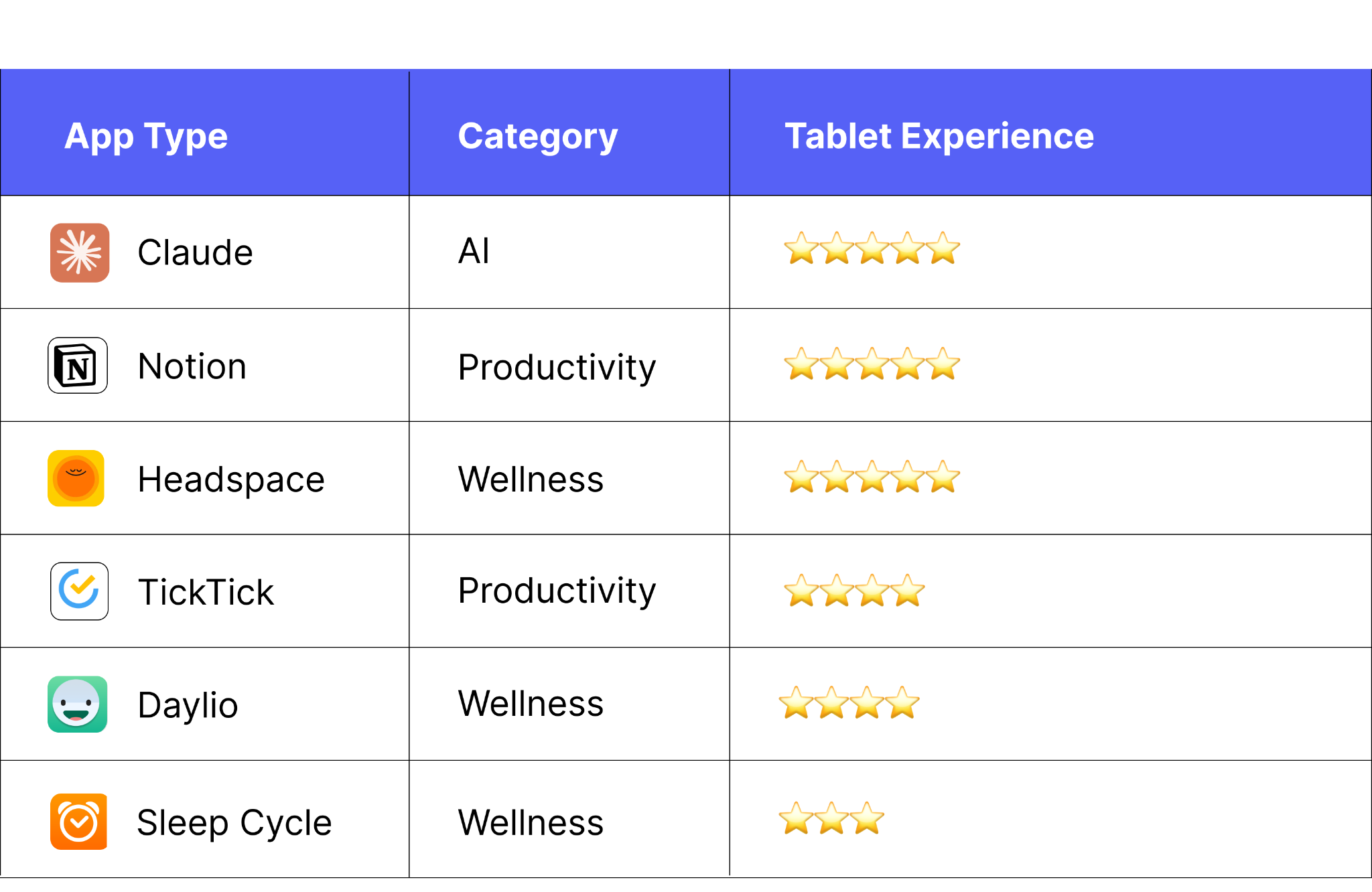
While all of these apps support tablets, some benefit from additional screen space more than others. Productivity and AI tools tend to gain the most value from larger displays, while wellness apps often provide a more immersive and distraction-free experience.
Wellness Apps Are Becoming More Intelligent
Wellness applications have evolved beyond simple fitness tracking and meditation timers.
Modern platforms increasingly combine mindfulness, habit tracking, sleep improvement, and personal insights within a single experience.
- Headspace remains one of the most popular choices for guided meditation, stress management, and sleep support. Its tablet experience feels particularly immersive thanks to the larger display.
- Daylio offers a different approach. Instead of guided content, it helps users track moods, activities, and habits over time. The larger screen makes it easier to review trends and identify long-term patterns.
A clear trend is emerging in this category. Users increasingly prefer apps that combine multiple wellness features rather than managing separate tools for every aspect of personal wellbeing.
Productivity Apps Are Becoming Workspaces
Many people now use tablets as lightweight productivity devices.
Instead of replacing a laptop entirely, tablets often become the place where users plan projects, organize information, and manage daily priorities.
- Notion AI is a strong example of this shift. Beyond note-taking, it can summarize information, generate drafts, organize research, and transform rough ideas into structured content.
- TickTick combines task management, scheduling, and focus tools in a single application. Features such as calendar views and Pomodoro timers work particularly well on larger screens.
Modern productivity tools are no longer focused on storing information. They help users organize knowledge and take action more efficiently.
AI Is Becoming a Daily Assistant
Artificial intelligence is rapidly becoming one of the most valuable features in modern applications.
The most useful AI tools are not trying to replace users. Instead, they help reduce friction and save time.
Claude is a good example. On a tablet, users can review documents, analyze notes, summarize information, and brainstorm ideas while benefiting from the larger display.
The experience feels natural because tablets are particularly well-suited for reading, reviewing, and interacting with long-form content.
As AI capabilities continue to improve, tablets are becoming increasingly effective tools for learning, planning, and knowledge work.
Conclusion
The best tablet apps in 2026 do more than add new features. They help users stay organized, build better habits, and make better use of their time.
Whether through AI-powered assistants, productivity workspaces, or wellness platforms, the most valuable applications are those that simplify everyday life rather than adding complexity.
As software continues to evolve, tablets are becoming less of a companion device and more of a central hub for work, learning, and personal wellbeing.

Jim's passion for Apple products ignited in 2007 when Steve Jobs introduced the first iPhone. This was a canon event in his life. Noticing a lack of iPad-focused content that is easy to understand even for “tech-noob”, he decided to create Tabletmonkeys in 2011.
Jim continues to share his expertise and passion for tablets, helping his audience as much as he can with his motto “One Swipe at a Time!”