
The Digital Referee: VAR and Goal-Line Technology in the Fairness Debate
The implementation of technology in football officiating was inevitable, born out of the frustration caused by high-profile human errors that dramatically influenced match outcomes. Today, two systems dominate the landscape: Goal-Line Technology (GLT) and the Video Assistant Referee (VAR) system.
While both are designed to enhance fairness and reduce refereeing mistakes, their operational methodologies, impact on the speed of the game, and public reception could not be more different. GLT offers instant, objective certainty, fulfilling its mandate with near-universal approval.

VAR, conversely, is a complex, human-involved process that frequently sparks controversy, leading to an ongoing debate over whether the increase in accuracy justifies the cost of disruption to the game's flow.
These innovations fundamentally change the dynamics of the game, including the reliability of real-time data for ancillary markets like sports betting, which often utilize platforms such as https://nvcasino-pl.pl/pl for market analysis.
The contrast between these two technologies highlights the core tension in modern sport: the trade-off between absolute accuracy and the fluid, emotional rhythm of the game.
Goal-Line Technology (GLT): Instant and Absolute
Goal-Line Technology was introduced specifically to address the binary question of whether “the whole of the ball” crossed the goal line. Its success is rooted in its simplicity, speed, and objective nature.
- Mechanism. GLT systems (such as Hawk-Eye or GoalControl) use a network of high-speed cameras or magnetic sensors to track the ball's position relative to the goal line with sub-centimeter accuracy.
- Speed and flow. The result is delivered directly to the referee's specialized watch via a simple, binary signal (“GOAL” or “NO GOAL”) within approximately one second. This speed is crucial; GLT operates seamlessly without interrupting the flow of play, maintaining the integrity of the emotional moment of a goal.
- Human error elimination. GLT virtually eliminates human error in the most critical decision of the game. Its objective, factual output is rarely debated, making it a gold standard for technological intervention in sport.
GLT is a testament to the fact that technology can enhance fairness without sacrificing the spontaneous joy and speed that define football.
Video Assistant Referee (VAR): The Cost of Scrutiny
The VAR system, introduced years after GLT, is designed to review a broader, more subjective set of “match-changing” incidents, including goals, penalty decisions, direct red card incidents, and mistaken identity.
| Feature | Goal-line technology (GLT) | Video assistant referee (VAR) | Primary debate point |
| Scope | Single, binary decision (Ball in/out). | Four subjective decision areas (Goals, Penalties, Red Cards, Identity). | Scope of subjectivity. |
| Speed/flow | Instant (within 1 second); no interruption to the game. | Slow (minutes of delay); disrupts match flow and player rhythm. | Integrity of the game's tempo. |
| Human error | Virtually eliminated (Objective output). | Transferred to VAR officials (Subjective interpretation error). | Accountability and transparency of the VOR team. |
| Cost | Fixed stadium installation cost (High upfront). | High ongoing operational cost (Staffing, centralized VOR). | Financial barrier to entry for lower leagues. |
VAR relies on a team of officials in a centralized Video Operation Room (VOR) who review multi-angle video replays of contentious incidents. Unlike GLT, the process is inherently human and requires subjective interpretation of intent (e.g., in handball or foul severity).
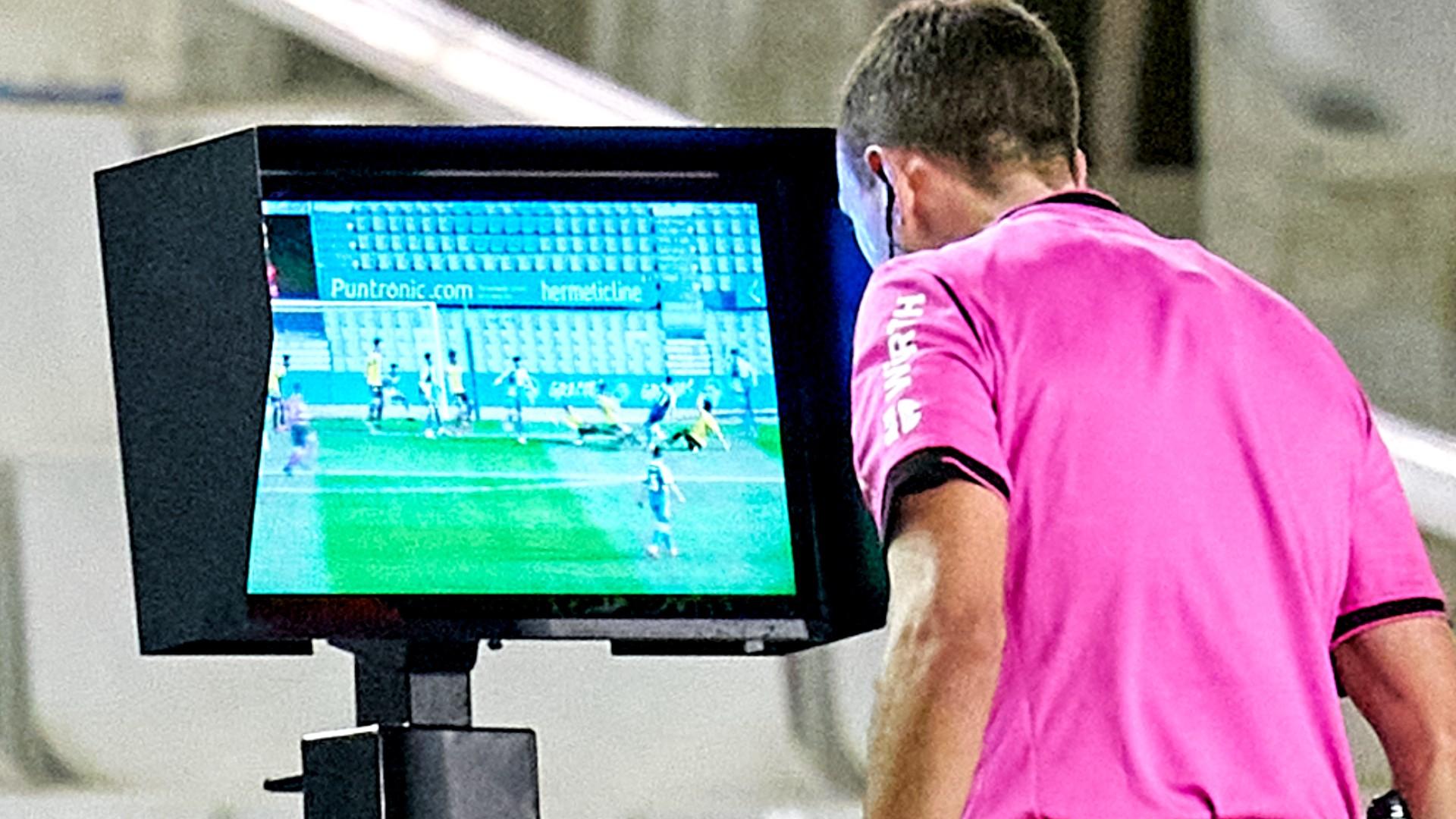
VAR's main criticism stems from the significant time it takes to review incidents. The process—which involves the VAR communicating with the on-field referee, or the referee conducting an “On-Field Review” (OFR) at a pitch-side monitor—disrupts the flow of the game, leading to delays that can last several minutes. Studies show VAR increases the total time of the match, reducing the amount of actual playing time.
The delays negatively affect the emotional high of a goal, as spontaneous celebrations are put on hold pending forensic review. This displacement of emotion is frequently cited by fans as undermining the “authenticity” of the match experience.
The Paradox of Certainty and Authority
VAR has undoubtedly improved the overall accuracy of decision-making (estimated to increase accuracy by over $6\%$). However, it presents a paradox of certainty: the more technology strives for absolute truth, the more its limitations (such as marginal offside calls measured by millimeters) provoke further scrutiny and debate.
Furthermore, VAR has led to a displacement of authority. The on-field referee, while retaining the final decision, has lost symbolic centrality, with control externalized to the VOR.
This reduction of human fallibility—which some view as part of the sport's drama—is precisely what causes fans and players to feel the game has become more mechanical and less spontaneous.
The Search for Balance
Goal-Line Technology represents the ideal implementation of sports technology: silent, instant, and irrefutable. VAR, while necessary for complex calls, continues to struggle with implementation, speed, and subjectivity.
The future of football technology lies in finding ways to integrate VAR's accuracy with GLT's seamlessness, potentially through increased automation (e.g., semi-automated offside technology) and clearer communication with fans.
The challenge remains to maximize fairness without fundamentally destroying the spontaneous rhythm and emotional fabric of the world's most popular sport. Do you believe the increased accuracy provided by VAR is worth the inevitable disruption to the game's flow?

Jim's passion for Apple products ignited in 2007 when Steve Jobs introduced the first iPhone. This was a canon event in his life. Noticing a lack of iPad-focused content that is easy to understand even for “tech-noob”, he decided to create Tabletmonkeys in 2011.
Jim continues to share his expertise and passion for tablets, helping his audience as much as he can with his motto “One Swipe at a Time!”