
The Untold Story of Blackjack: From Classic 21 to Online Domination!
How much do you truly know about the things that interest you? Do you have all the important historical and anecdotal facts that could make you a more knowledgeable fan and result in you enjoying the thing or activity even more? Questions like these need answering if you have a hobby or a pastime that means a lot.
There is no better way to get better at something and to enjoy it on a new level than to understand where it comes from, what it originally looked like, and who or where made it happen. The more niche the thing, the more interesting its history and road to modern relevance.
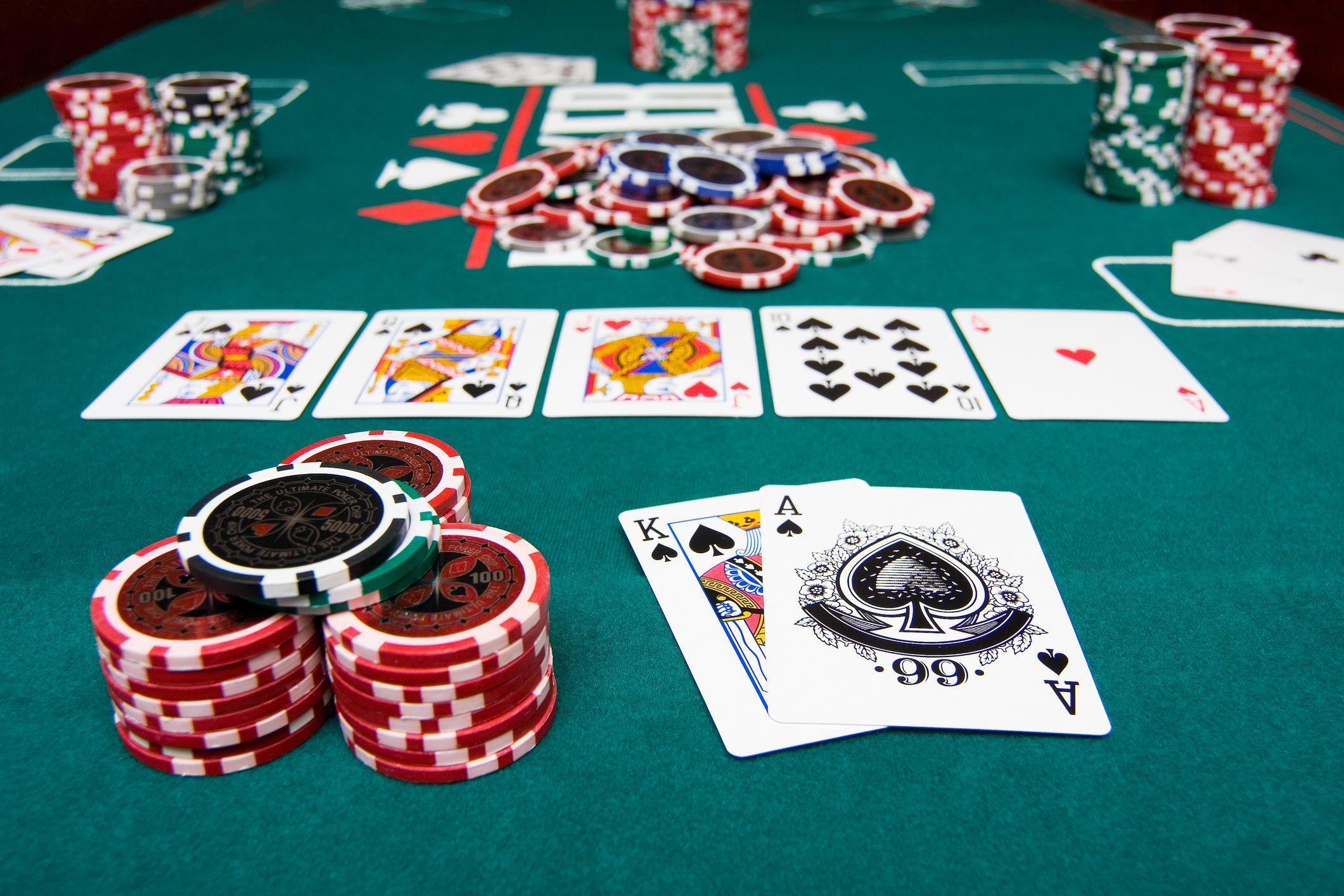
For those of you who are fans of online casino gambling and sports betting, here is a question: Have you ever wondered where the games you enjoy came from? Who made them? Where is their origin? If not, think about it for a second, and it will quickly start to become fascinating.
If you have wondered about it, have you found the answers? If the game of choice for you is the iconic card game blackjack, you are in for a treat. Its long history and journey from Europe, to the USA, and then the rest of the world is intriguing, rich in detail, and fascinating to say the least.
So, before you play your next round of modern blackjack on a platform like Stake, here is the untold story of the game that dominates the internet.
The Earliest Origins of Blackjack
Most experts agree that the earliest possible origins of the came point to the time between the late 16th and early 18th centuries in Europe. The game we now know as blackjack has murky and debated origins, but several familiar elements are present, allowing us to pinpoint its origins to this time and place.
Most historians trace its origin, but there are no documented moments of its invention. The most accepted theory is that the game evolved from earlier European card games that involved numerical totals and trying not to exceed a target number.
More of them existed at the same time in various places, and people would play them with local rules without knowing others do so as well.
A Spanish game called Veintiuna, meaning twenty one, is the first literary reference. Spanish author Miguel de Cervantes, best known for writing Don Quixote, described it in his short story collection Rinconete y Cortadillo in 1613.
The story features two cheats who play Veintiuna in Seville, where the goal was to reach 21 without going over. Key traits included the ace being worth 1 or 11, like in blackjack.
There was no mention of a dealer, but card counting like awareness and tactics did exist. It makes sense why this is the first documented ancestor of the modern game.
The Spaniards were not solely responsible for it, though, as the French did their own thing at roughly the same time. In 18th century France, there was a game called Ving-et-Un, very popular among the aristocracy. It was played at courts and fancy establishments.
The meaning of the word? Well, just like the Spanish variety, it too translates to twenty one. A frequent sight in casinos and salons, the version is considered the direct forerunner of modern blackjack. It did have its differences, however.
For example, the dealer could double bets after each round, and the players had to bet after each card. There was no payout bonus for a natural 21, as this came much later. It is thought to have evolved from other French games, mainly Chemin de Fer and French Ferme, both banking games involving trying to beat a dealer’s hand.
Of course, the Italians were in the mix as well. They had a popular game during the 17th century called Sette e Mezzo, meaning Seven and a Half. The objective was to reach 7.5 without busting (going over, and it was played with a 40 card deck.
However, no eights, nines, or tens were used. The face cards were worth half a point, and though the game has a lower target score, the mechanics of trying not to go over are conceptually similar to blackjack.
Together with Veintiuna and Vingt-et-Un, they give us the basis of what the modern game of blackjack is. With modern variations online introducing new elements, perhaps some of these can make a comeback. In the meantime, test your blackjack skills on Stake for one of the best options out there.
Blackjack Comes to the New World
During the 18th and early 19th centuries, French colonists and immigrants brought their Ving-et-Un to North America. They were particularly fond of New Orleans and Louisiana, places that to this day have strong French cultural ties.
In the early 1800s, the game began appearing in gambling houses and riverboats along the Mississippi River. Gambling was a popular and widespread pastime, although not always looked on lightly. Saloons and taverns were frequented by players looking to make some money and have a good time playing cards.
Once the game established itself in America, it underwent several rule changes that increased its appeal to the masses. For the next century, it was the go to option among gamblers.
In the late 19th and early 20th centuries, US gambling houses struggled to promote the game of 21. New games and ways to gamble appeared, and people shifted towards them. To attract players, some casinos offered a special bonus payout.
If a player’s first two cards were the Ace of Spades and a Black Jack (a jack of clubs or a jack of spades), they would receive 10:1 odds on their bet.
The hand became known as blackjack, and the name stuck even after the bonus was discontinued. This payout no longer exists in the modern games, i.e., anywhere in the world, but we still know the game by this name.
The American variety, and by extension the current one, had other rule adaptations and changes from what was previously used. Dealers were required to stand on 17, or sometimes hit soft 17, which varied by casino. Players could double down after receiving two cards.
Splitting pairs was introduced for more variety in play, and the dealer showed one card face up, which created strategic implications. Over time, these rules were standardized, especially in Nevada during the mid 20th century when Las Vegas casinos were starting to become a thing.
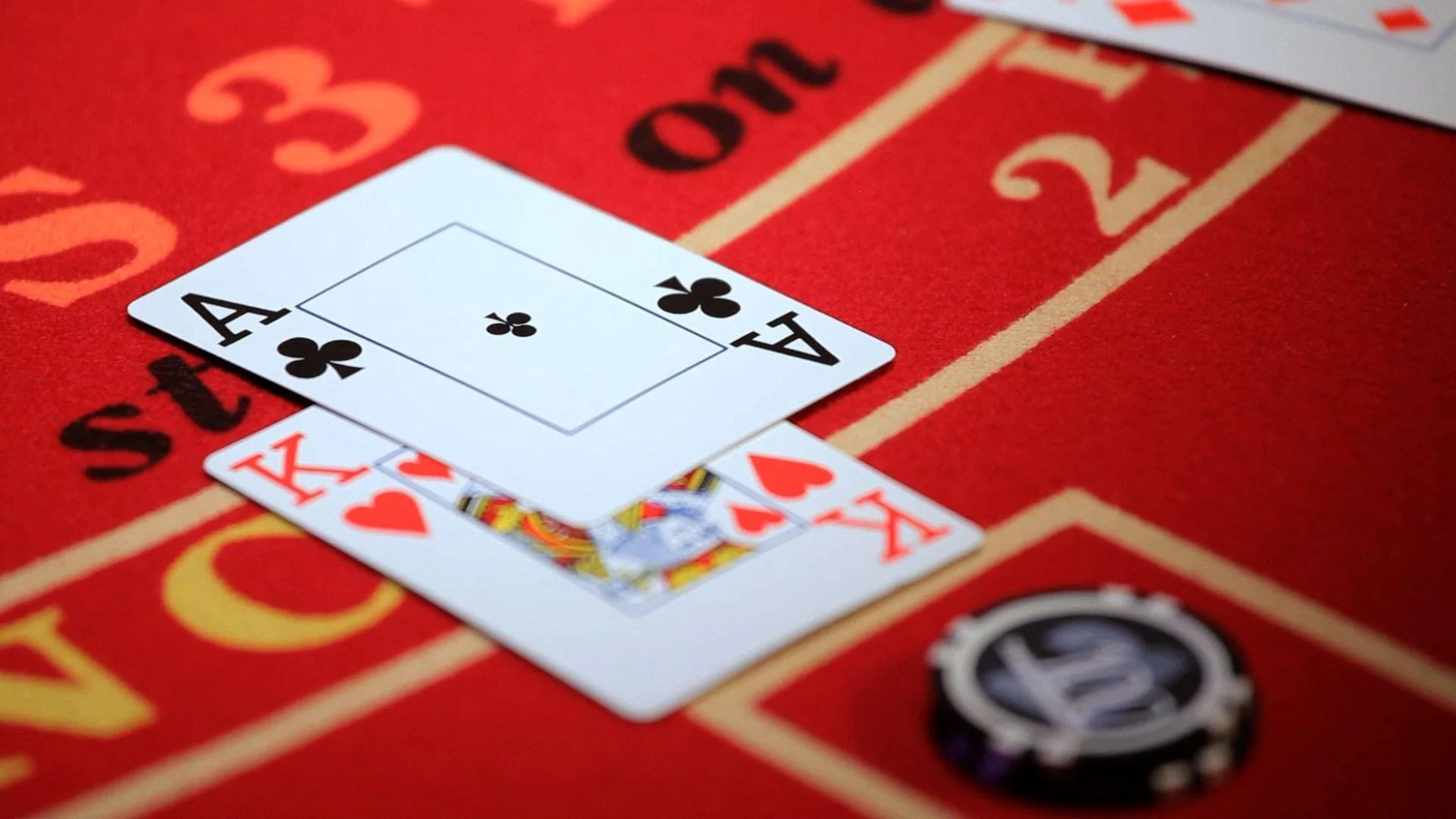
Speaking of, in 1931, Nevada legalized gambling, including card games like blackjack. It was a pivotal moment not just for the game and gambling, but for entertainment and the country as a whole. Casinos began offering official versions of the game, and rules became more standardized across the board.
Blackjack grew in popularity alongside poker, craps, roulette, and slot machines, which is how the traditional, classic games were established.
As the middle of the 20th century rolled around, there was a rise of strategic play and widespread popularity. Edward O. Thorp wrote his “Beat the Dealer” book in 1962. As a mathematics professor, he used probability theory to prove that the game of blackjack could be beaten using a card counting strategy.
His work revolutionized how players approached the game since the Hi-Lo counting system appeared. However, to balance the playing field, casinos began altering rules and adding multiple decks to counteract card counters and prevent too many winnings that would drive them out of business.
Decks were shuffled more frequently, known counters were banned, and increased surveillance tactics and monitoring were implemented.
Online Casinos and Blackjack
The rise of the widespread internet connection in the 1990s set the stage for the next massive change in the gambling industry. Online casinos appeared and transformed the market forever. It all started in the middle of the decade.
In 1994, Antigua and Barbuda passed the Free Trade and Processing Act that allowed licenses to be issued for online casinos. In the next few years, several companies were founded to support the development of online gambling infrastructure.
In 1994, Microgaming became the first to develop fully functional online casino software. Cryptologic, in 1995, focused on secure online financial transactions. And in 1996, the first real money online casino was launched, called InterCasino. It offered several games, including blackjack.
Early online games were based on basic software with no live dealers or animations as we see today. It was an instant hit with the internet crowd because it was familiar and trusted, it had a low house edge, and it lent itself well to single player formats.
Still, it was only the beginning. As internet speeds, browser capabilities, and graphic design improved, so did the online blackjack experiences and the whole gambling industry.
Improved graphics and user interfaces brought realistic card animations and sound effects that mimicked casino experiences. Multiple game variants were introduced, like multi hand blackjack, European, etc.
An instant fan favorite were bonus offers. Online platforms began using welcome bonuses and blackjack specific promotions to draw more players in. Some offered low house edge tables to entice serious players, and VIP and referral programs saw the light of day for the first time.
Apart from game variants and bonuses, side bets were another hit as the game became more customizable than ever.
Surrender, double after split, insurance…you name it. New side bets like Perfect Pairs and 21 + 3, unique variants like Vegas Strip, Atlantic City, Pontoon, and Spanish 21…it was a whole new experience during the 2000s.
Live Dealers, Mobile, and Beyond
One of the biggest leaps forward happened with live casino games that were made possible by broadband internet and video streaming. This technology started appearing in the late 200s and early 2010s, and reached its golden era in the early 2020s.
Live dealers combined human dealers with online convenience as streams from real studios or actual casinos gave players a more authentic, immersive feel. Players could interact with dealers and other players in real time through chat and look at each other through cameras.
Mobile and app based blackjack reached its peak during the late 2010s and early 2020s, when smartphones were already a go to entertainment device. Mobile blackjack had a responsive touchscreen interface adapted for smaller screens, while standalone apps were free to play for fun and available for real money rounds.
Mobile players could play multi hand blackjack, join live tables, practice with simulations and card counting trainers, and play anytime, anyplace.
Right now, smartphones and tablets are where most online gambling activity is being done, blackjack or otherwise. Platforms, games, and apps are made not only to be mobile friendly but also to be mobile first.
Finally, artificial intelligence (AI), random number generators (RNGs), algorithms, and fairness came into question. Blackjack games use RNGs to simulate card dealing, whereas independent audits ensure games are fair and transparent.
Thanks to provably fair algorithms, cryptocurrencies, and blockchain technology, platforms let users verify the fairness of each hand to make things completely legitimate and honest. Today, blackjack is a mainstay of online casinos, which you can see for yourself when you check Stakke online casino hub.
It is always among the top played titles regardless of what type. From solo play standard RNG blackjack and live dealer options, to tournaments, crypto blackjack, or virtual reality (VR) titles, it is more popular than ever before and here tos tay.
A Quick Round of Blackjack FAQs
Can the dealer hit on a soft 17?
It depends on the casino rules. Some dealers hit on soft 17 (Ace + 6), others stand.
Should I always hit on 16?
Not always. If the dealer shows a 2-6 (weak hand), it is usually better to stand. If the dealer shows 7-Ace, hitting is usually safer.
Is card counting illegal?
No, but casinos can ban you if they catch you doing it.
What is the best basic strategy move?
Always split Aces and 8s. Always hit on 11. Never take insurance.
What is a soft hand vs. a hard hand?
A soft hand includes an Ace counted as 11 (A-6). A hard hand either has no Ace or the Ace counts as 1 (10-6).
Can I lose even if I have 21?
Yes, if the dealer also has 21 and you don’t have a Blackjack (Ace + 10 on first two cards), it is a push (tie), not a win.
What is the house edge in Blackjack?
With a perfect basic strategy, the house edge can be as low as 0.5%, one of the best odds in the casino.

Jim’s passion for Apple products ignited in 2007 when Steve Jobs introduced the first iPhone. This was a canon event in his life. Noticing a lack of iPad-focused content that is easy to understand even for “tech-noob”, he decided to create Tabletmonkeys in 2011.
Jim continues to share his expertise and passion for tablets, helping his audience as much as he can with his motto “One Swipe at a Time!”