
Fortnite on Tablet vs Desktop: Which Platform Offers the Best Experience?
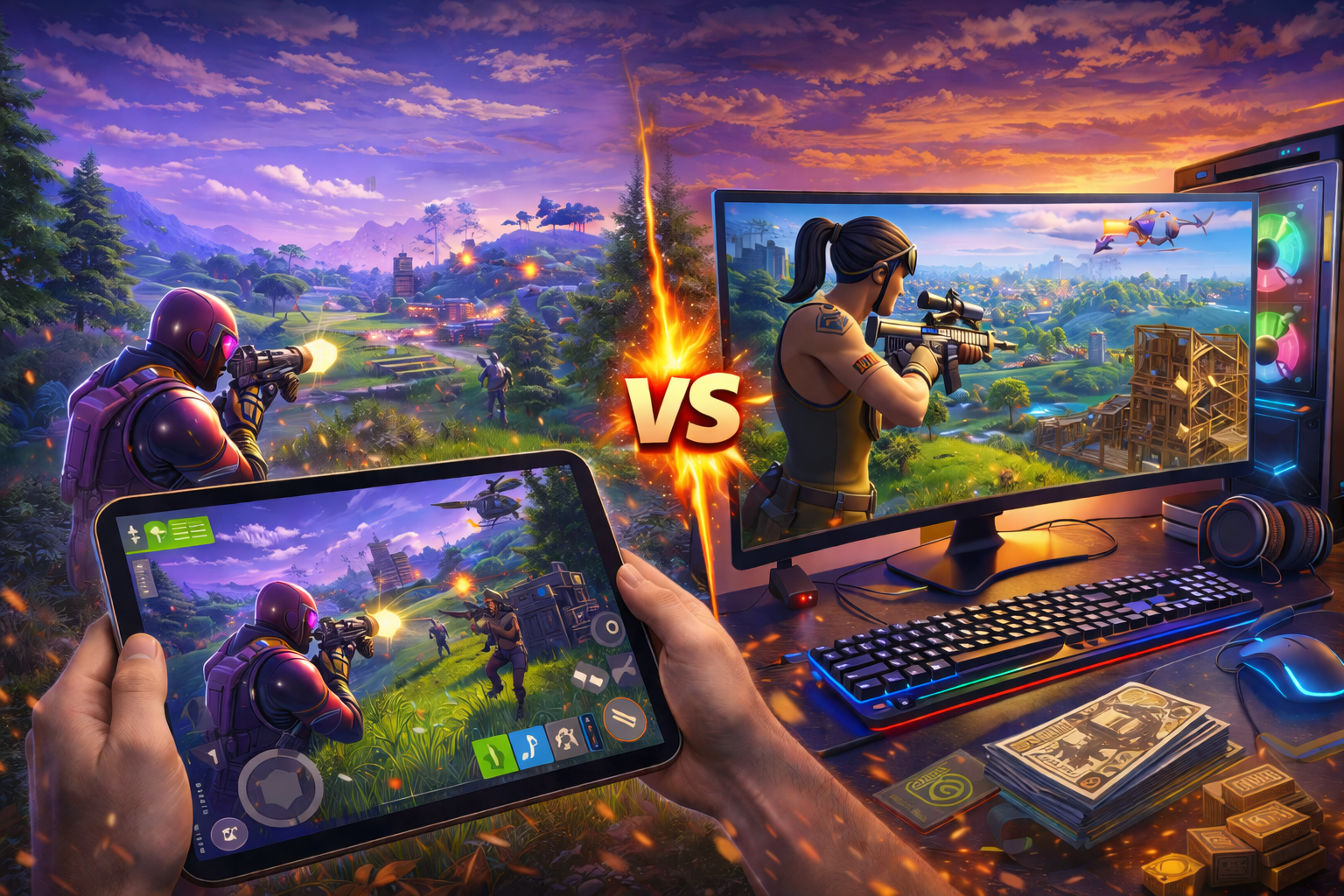
Fortnite has become one of the most accessible battle royale games, available across virtually every gaming platform including tablets, smartphones, consoles, and desktop PCs.
For tablet users considering jumping into Epic Games' phenomenon, understanding the differences between tablet and desktop experiences helps determine which platform best suits individual gaming preferences and circumstances.
Platform Availability and Access
Fortnite's availability on tablets has evolved significantly since launch. iPad users can download the game through the App Store, while Android tablet owners access it via the Epic Games app or Samsung Galaxy Store.
This cross-platform compatibility means players can start on tablets and continue progress on desktop, maintaining the same account across devices.
For players seeking established accounts with premium skins and battle pass progress, options like fortnite accounts for sale provide immediate access to advanced content across all platforms.
Services such as Gameboost offer accounts that work seamlessly whether playing on tablet or desktop, allowing flexibility in platform choice without sacrificing account progression.
Graphics and Performance Comparison
The most significant difference between tablet and desktop Fortnite lies in graphical fidelity and performance. Desktop PCs with dedicated graphics cards can push frame rates above 144 FPS at maximum settings, delivering buttery-smooth gameplay with enhanced visual effects.
High-end tablets like the iPad Pro and Samsung Galaxy Tab S9 can achieve 60-120 FPS, but typically at reduced graphical settings compared to desktop counterparts.
Modern tablets employ mobile-optimized versions of Fortnite that scale graphics dynamically based on hardware capabilities. While this ensures playable performance, it means tablet players experience lower texture quality, reduced draw distances, and simplified particle effects.
Desktop players enjoy fuller visual experiences with better shadow quality, higher resolution textures, and more detailed environments.
Battery life presents another performance consideration. Intensive gaming sessions drain tablet batteries rapidly, typically lasting 2-4 hours depending on device and settings.
Desktop systems bypass this limitation entirely when plugged into power sources, enabling extended gaming sessions without interruption.
Control Schemes and Input Methods
Control methodology represents perhaps the most debated difference between platforms. Desktop Fortnite players use keyboard and mouse, offering precision aiming and quick building controls that competitive players prefer.
The ability to bind specific actions to individual keys creates efficient workflows that experienced players execute instinctively.
Tablet Fortnite relies on touchscreen controls with on-screen buttons for movement, building, and combat. While functional, touchscreen controls lack the tactile feedback and precision of physical inputs.
Epic Games has refined mobile controls significantly, introducing features like aim assist to help compensate for touchscreen limitations, but the fundamental difference in input precision remains.
Some tablets support external controller connections via Bluetooth, offering a middle ground between touchscreen and keyboard/mouse controls.
This option provides physical button feedback while maintaining tablet portability, though it doesn't quite match the precision of mouse aiming.
Competitive Considerations
Epic Games separates Fortnite players into different matchmaking pools based on input method. Touch-only mobile and tablet players typically face other touch players, while those using controllers or connecting to PC lobbies encounter appropriately matched opponents. This system helps balance the inherent advantages desktop players have in building speed and aim precision.
For competitive players, desktop remains the preferred platform. Professional Fortnite tournaments overwhelmingly feature PC players due to performance consistency, control precision, and the ability to maximize frame rates. Tablet gaming serves better for casual play, practice, or gaming on the go rather than serious competitive pursuits.
Portability vs Power Trade-offs
Tablets' primary advantage over desktop systems lies in portability. Playing Fortnite anywhere with stable internet connection—during commutes, while traveling, or away from home—offers flexibility desktop setups cannot match. This mobility suits players with unpredictable schedules or those who game in multiple locations.
Desktop systems sacrifice portability for raw power and upgrade potential. Players can improve performance by upgrading graphics cards, processors, or adding more RAM. Tablets offer no such upgrade paths, requiring complete device replacement to improve performance.
The Verdict
Neither platform objectively surpasses the other—the “best” choice depends entirely on individual priorities. Competitive players seeking maximum performance and precision should choose desktop systems. Casual players valuing portability and convenience may find tablets perfectly adequate.
Many Fortnite enthusiasts maintain accounts on both platforms, using tablets for casual mobile sessions and desktops for serious competitive play.
Cross-platform progression means time invested on either platform benefits overall account advancement, making multi-platform gaming viable without duplicate effort.
For tablet-focused players, modern high-end devices like iPad Pro models or flagship Android tablets deliver increasingly impressive Fortnite experiences that continue closing the gap with desktop performance, even if parity remains distant.

Jim's passion for Apple products ignited in 2007 when Steve Jobs introduced the first iPhone. This was a canon event in his life. Noticing a lack of iPad-focused content that is easy to understand even for “tech-noob”, he decided to create Tabletmonkeys in 2011.
Jim continues to share his expertise and passion for tablets, helping his audience as much as he can with his motto “One Swipe at a Time!”